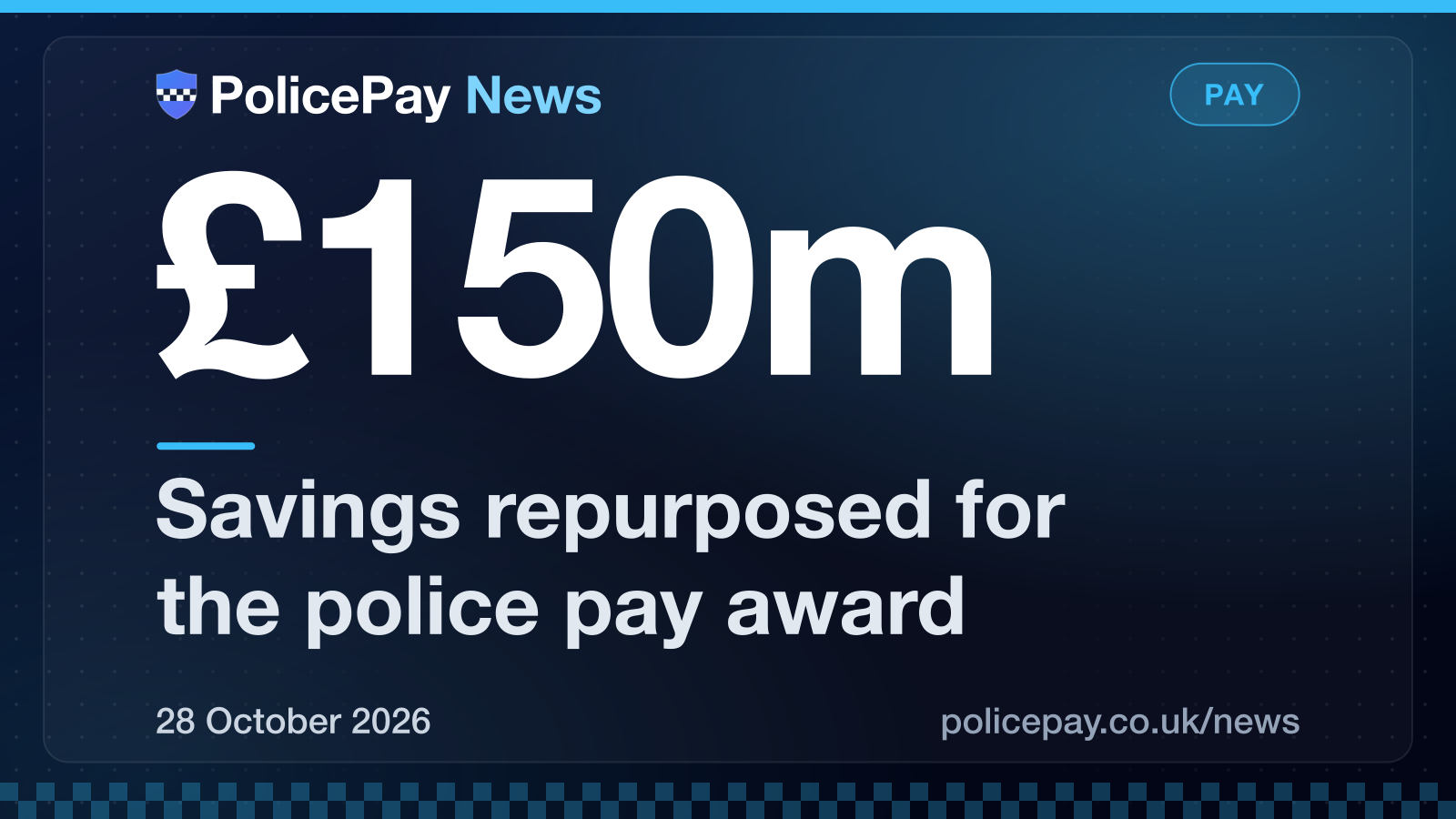
Budget 2026: £150m of savings repurposed for the police pay award, tax and pension limits unchanged
The Budget published today names £150 million of savings from the Afghan Resettlement Programme to help pay for the 3.5% police pay award. Income tax thresholds, National Insurance thresholds and pension tax limits stay where they are for 2027-28. Here is what changed and what did not.
What it means for you
- No new pay rise: the Budget does not change the 3.5% award paid from 1 September 2026. It says £150 million of savings from the Afghan Resettlement Programme will help fund that award in England and Wales.
- Your tax bands do not move in April 2027: the Personal Allowance stays £12,570 and the higher rate still starts at £50,270. As your pay rises, more of it is taxed at 20% or 40%.
- Pension tax limits are the same for 2027-28: £60,000 annual allowance and £268,275 lump sum allowance. Nothing in the Budget changes police pension scheme benefits or member contribution rates.
- Savings outside an ISA and rental income will be taxed at 24%, 44% and 49% from April 2027, two points more than already planned (Scotland and Wales can set their own property rates).
- Retired officers: the full new State Pension rises 3.9% from April 2027. From April 2030 the Triple Lock will be adjusted to track earnings.
The Chancellor delivered Budget 2026 today, 28 October 2026. HM Treasury published the Budget document and HMRC published its overview of tax legislation and rates (OOTLAR) with a rates and allowances annex. We have read them for anything that touches police officers and police staff. Most of the news is what did not change, plus one line on police pay.
Budget 2026: the numbers for police
- £150m Savings repurposed for the 2026 police pay award Budget 2026
- £12,570 Personal Allowance in 2027-28, unchanged HMRC, Annex A
- £60,000 Pension annual allowance in 2027-28, unchanged HMRC, Annex A
- 3.9% Full new State Pension rise from April 2027 DWP, HCWS427
Four figures from Budget day, 28 October 2026. £150m of Afghan Resettlement Programme savings repurposed to support the 2026 police pay award in England and Wales. The Personal Allowance stays at £12,570 in 2027-28. The pension annual allowance stays at £60,000. The full new State Pension rises 3.9% from April 2027.
Police pay: £150m named for the 2026 award
The Budget does not set police pay and does not announce a new award. It does say where part of the money for the current award comes from. In its list of policy decisions, the Budget document says £150 million (£150m) of savings from the Afghan Resettlement Programme "is being repurposed to support the costs of the 2026 police pay award in England and Wales", as part of the reprioritisation the Home Office announced in July.
The award itself was announced on 15 July 2026. The Police Remuneration Review Body had recommended 3.9%; the Government gave 3.5% to all ranks and pay points from 1 September 2026. It said the Home Office would give forces extra funding of £84m in 2026-27, £144m in 2027-28 and £145m in 2028-29 from contingency budgets. The Budget does not say how the £150m relates to those amounts or which years it covers. Our police pay rise 2026/27 guide explains the award and back pay. How the pay award process works covers what happens next for 2027/28.
Police staff pay is negotiated separately through the Police Staff Council. The Budget says nothing about it.
Income tax and National Insurance: frozen for 2027-28
HMRC's rates and allowances annex shows no change for officers' and staff members' pay in the 2027-28 tax year. In England, Wales and Northern Ireland the Personal Allowance stays at £12,570, the basic rate band at £37,700 (so the higher rate starts at £50,270) and the additional rate at over £125,140. The rates stay at 20%, 40% and 45%. The Personal Allowance is still withdrawn above £100,000. Scottish income tax rates and bands are set by the Scottish Parliament.
For National Insurance, the Treasury will raise the lower earnings limit by September's 3.5% CPI figure to £6,916 a year (£133 a week). OOTLAR says the remaining National Insurance limits and thresholds will be maintained at 2026-27 levels until the 2030-31 tax year, as previously announced. Because thresholds stay still while pay rises, a pay award or a move up a pay point means a larger share of your pay falls into the 20% band (and, for some sergeants and inspectors, the 40% band). Our take-home pay explainer shows how tax, NI and pension come off a police payslip.
Pensions: limits unchanged, a few tax changes
The pension tax limits are the same for 2027-28 as now: an annual allowance of £60,000, a tapered annual allowance that applies when adjusted income is over £260,000, a lump sum allowance of £268,275 and a lump sum and death benefit allowance of £1,073,100. If a promotion or a big pay rise could push a final-salary pension over the annual allowance, our police pension annual allowance guide explains how it is measured.
What Budget 2026 changed and what it left alone
Unchanged for 2027-28
- Personal Allowance £12,570; higher rate from £50,270
- Most NI thresholds held to 2030-31
- Annual allowance £60,000
- Lump sum allowance £268,275
Changed or announced
£150m
- £150m named for the 2026 police pay award
- Savings and property tax 24%, 44%, 49% from April 2027
- Two-year rule on death benefits removed
- State Pension up 3.9% in April 2027
Comparison. Unchanged for 2027-28: Personal Allowance £12,570 with the higher rate from £50,270; most National Insurance thresholds held to 2030-31; pension annual allowance £60,000; lump sum allowance £268,275. Changed or announced: £150m named for the 2026 police pay award; savings and property income tax at 24%, 44% and 49% from April 2027; the two-year rule on death benefits removed; State Pension up 3.9% in April 2027.
Changes announced today that may matter to officers and their families:
- Death benefits paid late. The two-year rule is being removed. Tax-free pension and lump sum death benefits will no longer become taxable just because they are paid more than two years after the scheme knew, or should have known, of the member's death. It applies to payments made on or after 28 October 2026.
- Terminal illness. The Finance Bill will change the definition of terminal illness so terminally ill people can reach their pension savings more easily, with overseas registered medical practitioners allowed to give the medical evidence.
- Inheritance tax on pensions from 6 April 2027. This was legislated in Finance Act 2026 and still goes ahead. The Budget adds technical changes, including letting a prospective personal representative direct scheme administrators to pay the inheritance tax due, in certain conditions.
- Salary sacrifice. The Budget refers to the existing cap on pension contributions that can be salary sacrificed. The law already sets a £2,000 a year limit for National Insurance purposes from 2029-30.
The Budget also confirms that employer contributions to public service pension schemes will be lower following the 2024 valuations. It treats this as a technical change to department budgets, made "with a view to ensuring that departments are no worse or better off". It does not publish the new employer rate for the police schemes. Nor does it announce any change to the benefits officers build up or the contributions members pay.
Savings, State Pension and other changes
From 6 April 2027 savings income will be taxed at 24% (basic), 44% (higher) and 49% (additional). New property income rates will be the same in England, Wales and Northern Ireland (Scotland and Wales can set their own property rates). Finance Act 2026 had already set 22%, 42% and 47% for 2027-28, so today's change adds two points. Savings inside an ISA are not affected; the ISA limit stays at £20,000.
In a separate statement today, the Work and Pensions Secretary said the full new State Pension will rise by 3.9% from April 2027, around £490 a year. The Budget says that from April 2030 the State Pension will rise each year by the highest of 2.5%, inflation or the amount required to maintain its value relative to earnings as reached in April 2029. The April 2027 increase for police pensions in payment is set separately by September's CPI figure: see the April 2027 police pension increase explained.
What to do now
Nothing changes on your payslip because of today's Budget. If you want to see your own figures for this year, use the free police salary calculator. Our full Budget 2026 guide for police pay, pensions and tax has been updated from today's documents, with every change and every unchanged limit in one place.
Sources
- HM Treasury, Budget 2026 (HTML), 28 October 2026. Policy decisions: £150 million of savings from the Afghan Resettlement Programme repurposed to support the costs of the 2026 police pay award in England and Wales. Technical change for lower employer pension contributions from the 2024 public service pensions valuation. Capping pension contributions that can be salary sacrificed. Triple Lock adjusted from April 2030. Terminal illness definition and removal of the two-year rule for death benefits from 28 October 2026. Accessed 28 October 2026.
- HMRC, Budget 2026: Overview of tax legislation and rates (OOTLAR), 28 October 2026. Savings and property income rates of 24%, 44% and 49% from 2027-28; two-year rule removal for payments on or after 28 October 2026; inheritance tax technical amendments; NI lower earnings limit £6,916 a year (£133 a week) using September CPI of 3.5%; remaining NI limits and thresholds maintained at 2026-27 levels until 2030-31. Accessed 28 October 2026.
- HMRC, Budget 2026 OOTLAR Annex A: rates and allowances, 28 October 2026. 2026-27 and 2027-28: Personal Allowance £12,570; basic rate band £37,700; higher rate £37,701 to £125,140 of taxable income; 20%, 40% and 45%; income limit £100,000. Annual allowance £60,000; tapered annual allowance adjusted income £260,000; lump sum allowance £268,275; lump sum and death benefit allowance £1,073,100; ISA limit £20,000. Accessed 28 October 2026.
- House of Commons written statement HCWS264, Police workforce (Home Secretary, 15 July 2026). PRRB recommended 3.9%; Government awarded 3.5% to all ranks and pay points from 1 September 2026; extra funding of £84m in 2026-27, £144m in 2027-28 and £145m in 2028-29 from contingency budgets. Accessed 28 October 2026.
- House of Commons written statement HCWS427, Statutory review of state pension and benefit rates: 2027/28 (28 October 2026). New and basic State Pension up 3.9% from April 2027 in line with earnings; full new State Pension up around £490 a year; other rates up 3.5% in line with September CPI. Accessed 28 October 2026.
- Finance Act 2026, sections 5 and 7 (legislation.gov.uk). Savings rates and property income rates of 22%, 42% and 47% for 2027-28, as legislated before Budget 2026. Accessed 28 October 2026.
Corrections
No corrections to this article.
If we get something wrong, we fix it, add a dated correction here, update the time above and record it in our public corrections log. To report an error, email andrew@policepay.co.uk or use the contact page with the figure and your source. This article is general information, not financial or legal advice.
About this article
Written by Andrew Thomas, Founder, PolicePay. Before publishing, every figure and claim was checked against the primary sources above in a separate, independent check. Articles are not published until that check passes. Read About Police Pay News for how we choose stories, check facts, use AI tools and stay independent. Our news standards set the rules.