Independent. Not affiliated with any police force or the Home Office.
Police pay, pensions and careers: the numbers that matter
Work out your take-home payPolice pay 2026/27, England and Wales
from 1 September 2026- Constable, starting pay pay point 1
- £32,255
- Constable, top of scale pay point 7
- £52,015
- Sergeant, top of scale all forces
- £58,175
- Inspector, top of scale outside the Met and City (£74,206 there)
- £71,396
Basic pay a year, before allowances. Source: the official 2025/26 scales plus the 3.5% award, rounded to the nearest pound; Home Office tables may differ by a few pounds.
All pay points and ranksStart with what you need
- Serving officers
Pay, overtime, pension, allowances and your rights under the regulations.
- Police staff
Where the 2026/27 pay rise has got to, staff pay scales and the LGPS pension.
- Joining the police
Entry routes, the National Sift, interviews, fitness and vetting, step by step.
- Promotion and exams
Sergeant and inspector exams, promotion boards and the detective exam.
What's changing now
- Police staff pay 2026/27 Employers' offer: not published yet Latest: GMB: 'no substantive update'; talks hoped for w/c 19 October (9 Oct 2026). Checked 19 October 2026.
- Police pensions Police pensions rise 3.5% in April 2027 September 2026 CPI was 3.5%. See what it means in pounds for pensions in payment, first-year pensions, deferred pensions and 2015 scheme revaluation (4.75%).
- Promotion exams Sergeant exam results expected by 29 October For the October 2026 sitting: what the result means, how long a pass lasts and how resits work.
- Promotion exams Inspector exam: 3 to 5 November 2026 Registration: 7 September to 5 October. Results are expected by 26 November.
- Detective exam (NIE) Next NIE: Tuesday, 17 November 2026 Registration deadline: 6pm, 21 October 2026. Results are due 8 December 2026.
- Promotion exams Inspector exam results expected by 26 November For the November 2026 sitting: what the result means, how long a pass lasts and how resits work.
- Promotion exams Sergeant exam: 16 to 18 March 2027 Registration: 18 January to 18 February. Results are expected by 8 April.
- Promotion exams Sergeant exam results expected by 8 April For the March 2027 sitting: what the result means, how long a pass lasts and how resits work.
- Promotion exams Inspector exam: 11 to 13 May 2027 Registration: 15 March to 15 April. Results are expected by 3 June.
- Promotion exams Inspector exam results expected by 3 June For the May 2027 sitting: what the result means, how long a pass lasts and how resits work.
- Promotion exams Sergeant exam: 5 to 7 October 2027 Registration: 3 August to 9 September. Results are expected by 28 October.
- Promotion exams Sergeant exam results expected by 28 October For the October 2027 sitting: what the result means, how long a pass lasts and how resits work.
- Promotion exams Inspector exam: 2 to 4 November 2027 Registration: 6 September to 4 October. Results are expected by 25 November.
- Promotion exams Inspector exam results expected by 25 November For the November 2027 sitting: what the result means, how long a pass lasts and how resits work.
Latest news
All news Welfare and wellbeing · 22 October 2026Investigator Wellbeing Week of Action runs 9 to 13 November: registration now open
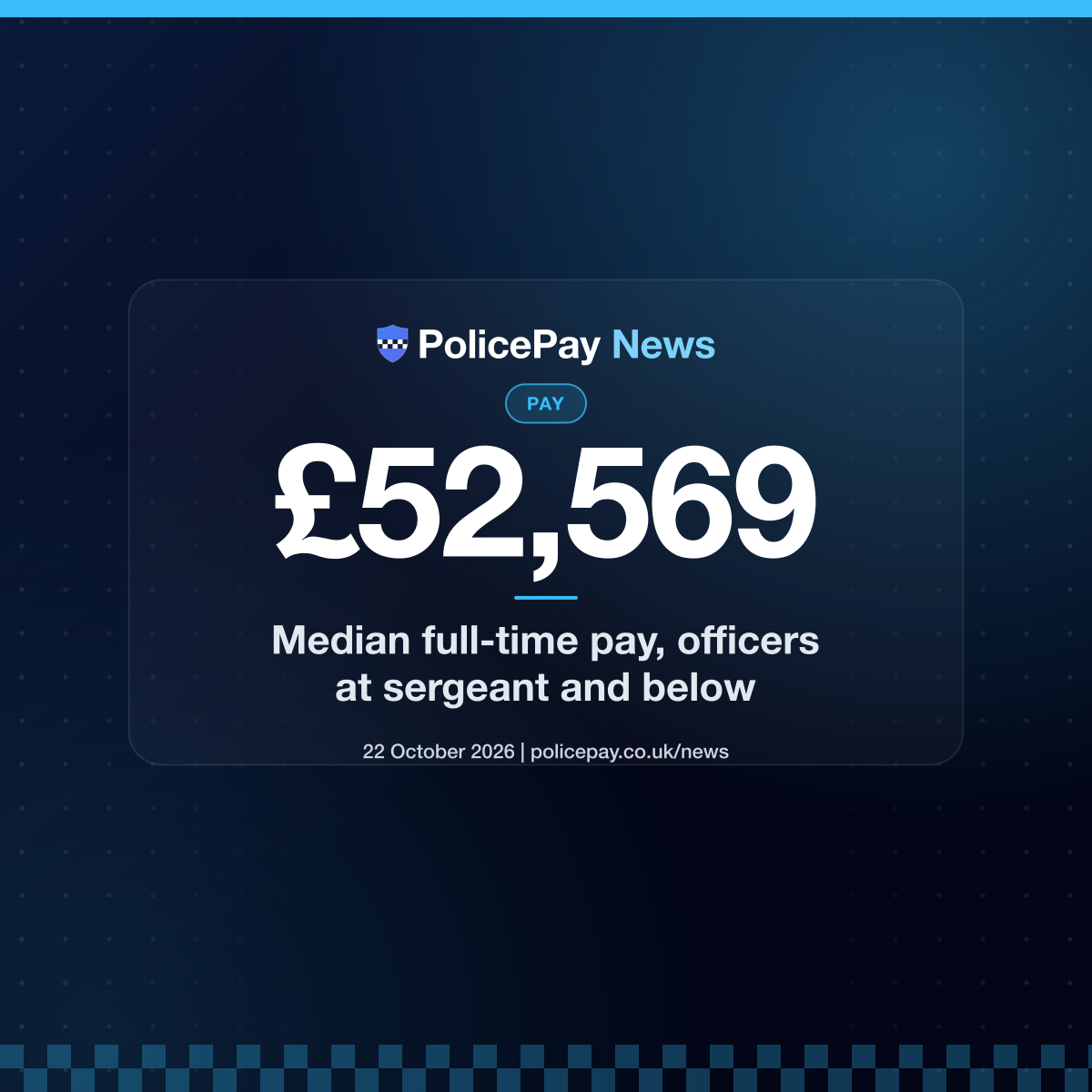 Pay · 22 October 2026Police officer earnings 2026: ONS puts the typical full-time officer on £52,569, up 5.4%
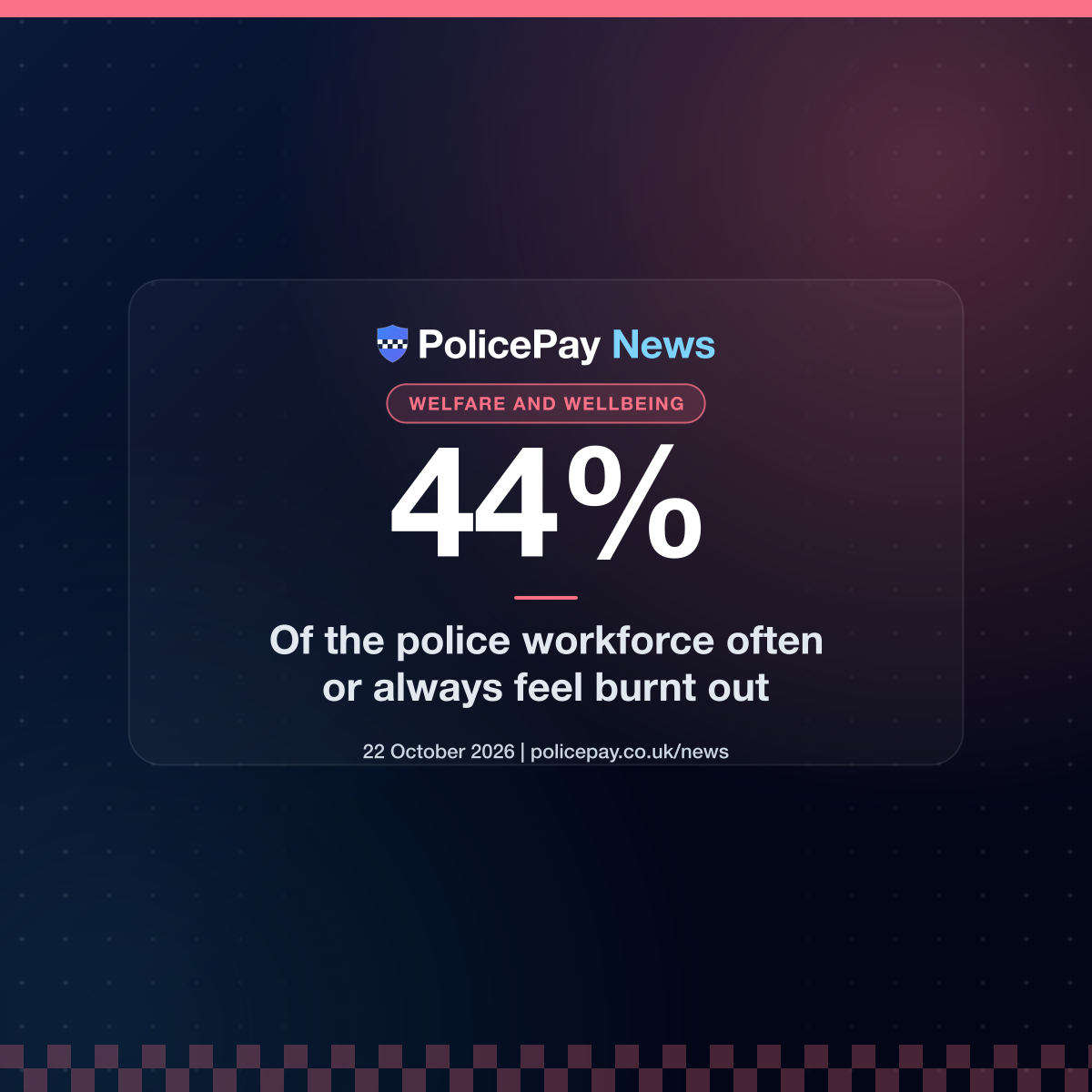 Welfare and wellbeing · 22 October 2026Workload is the strongest driver of poor police wellbeing, national report finds
Calculators and tools
All tools- Salary and take-home pay Net pay by rank, pay point and allowances.
- Police pension calculator 1987, 2006 and 2015 schemes, with McCloud.
- Overtime Time and a third, rest days and bank holidays.
- Tax relief checker Uniform allowance, Federation subs and mileage.
- Survivor pension What a spouse, partner and children would get.
- Career break The pay and pension cost of time out.
- Maternity pay Full pay, SMP and your income over 52 weeks.
- Injury award Injury on duty gratuity and pension, bands 1 to 4.
- Mortgage borrowing How lenders treat police pay and overtime.
- Part-time pay Pro-rata pay and take-home if you cut your hours.
- Mock interview Practise interview questions, with feedback.
- National Sift SJT practice Free scenarios, with the reasoning for each answer.
Pension Command Centre, £47
Plan your police pension properly
Model your police pension across the 1987, 2006 and 2015 CARE schemes, including McCloud scenarios, retirement age, lump sum choices, commutation and lifetime pension value.
The calculator gives you a free estimate first. The full Command Centre is £47: no subscription, nothing renews and a 14-day refund with no reason needed.
Built for long-term pension planning. Independent modelling only. Not regulated financial advice.
- McCloud remedy scenarios
- Retirement age comparisons
- Lump sum and commutation analysis
- Lifetime pension value projections
Common questions
How much are police officers paid in 2026?
From 1 September 2026, a new constable in England and Wales starts on £32,255 (pay point 1) and reaches £52,015 at the top of the scale. Sergeants go up to £58,175 and inspectors to £71,396 (£74,206 in the Met and City of London). These figures are the 2025/26 scales plus the 3.5% award, rounded to the nearest pound. London Weighting and other allowances are paid on top.
Full pay scalesHow much does a police officer take home?
A new constable on £32,255 takes home about £1,950 a month after income tax, National Insurance and a 12.88% pension contribution. At the top of the constable scale (£52,015) it is about £2,940 a month, with a 13.88% contribution. These are England and Wales estimates for the 2026/27 tax year, before Federation subscriptions, student loan repayments, overtime or allowances.
Work out your own take-home payIs the police pension worth it?
For most officers, yes. The 2015 scheme is a defined benefit (career average) scheme: each year you build a pension of 1/55.3 of your pensionable pay, revalued every year you serve by CPI plus 1.25%, then paid for life and increased with CPI. It also includes ill-health and survivor benefits. The cost is a member contribution of 12.88% to 14.22% of pensionable pay, taken before tax. Opting out saves that contribution but gives up the pension the force pays for and the ill-health and death cover.
Pension against take-home payWhat are police overtime rates?
Constables and sergeants in England and Wales are paid overtime at time and a third (or can take time off instead), rest days worked with less than 15 days' notice at time and a half and public holidays at double time (Police Regulations 2003, regulations 25 and 26, Annexes G and H). Inspectors and above do not get overtime pay. Police Scotland has its own rules.
Overtime calculatorWhat is the police retirement age?
There is no compulsory retirement age for serving officers. When you can draw your pension depends on the scheme. In the 2015 scheme, normal pension age is 60, or from 55 with a permanent reduction for early payment. The 2006 scheme pays an unreduced pension from 55 if you retire from service. The 1987 scheme pays from 50 with 25 years' service, or at any age with 30 years. Most serving officers have service in more than one scheme.
Can I retire at 55?Email updates you choose
Pick the topics you want: officer pay, police staff pay, pensions, injury and ill-health, promotion or joining the police. Occasional emails written by hand, unsubscribe any time.
Independent and open about it
PolicePay is not part of any police force, the Police Federation, a union or the Home Office. Figures come from published pay scales, regulations and official sources. Each guide names its sources. The site is paid for by advertising, force partnerships and paid versions of some tools. Nothing here is regulated financial advice.