Public sector pay growth is 5.4%: why that is not the same as your 3.5% police pay rise
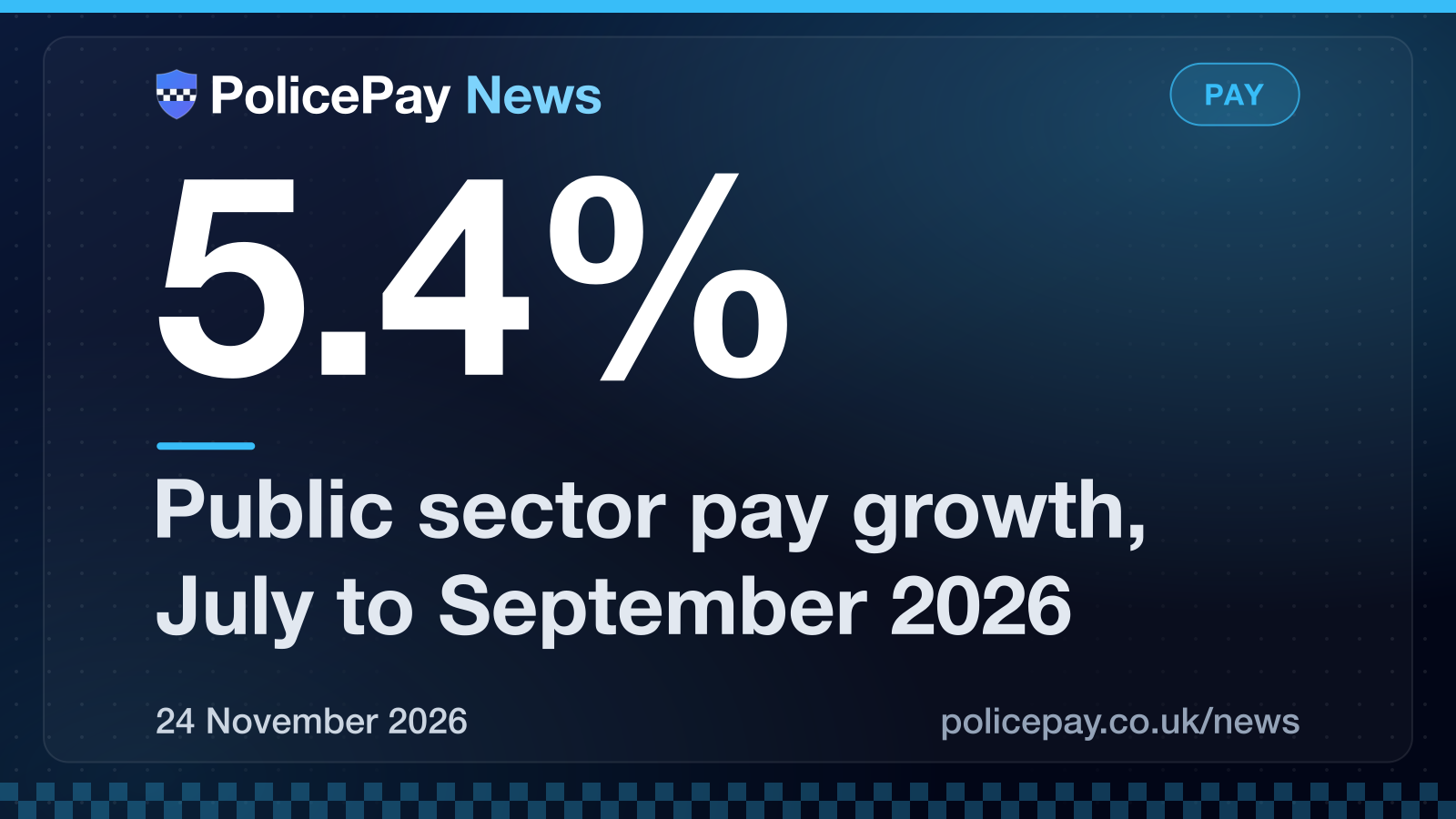
The latest ONS earnings figures show average regular pay in the public sector up 5.4% on a year earlier, against 3.1% in the private sector. Police officers and police staff both have 3.5% from 1 September 2026. Here is why the two numbers differ and what to watch for the 2027/28 round.
What it means for you
- The 5.4% is not a pay award. It is the ONS's growth in average regular weekly pay across the whole public sector. The ONS says it is still affected by the timing of some pay awards this year.
- Officers in England and Wales: your award is 3.5% from 1 September 2026. The ONS figure does not change it and does not mean other public sector workers got 5.4% rises.
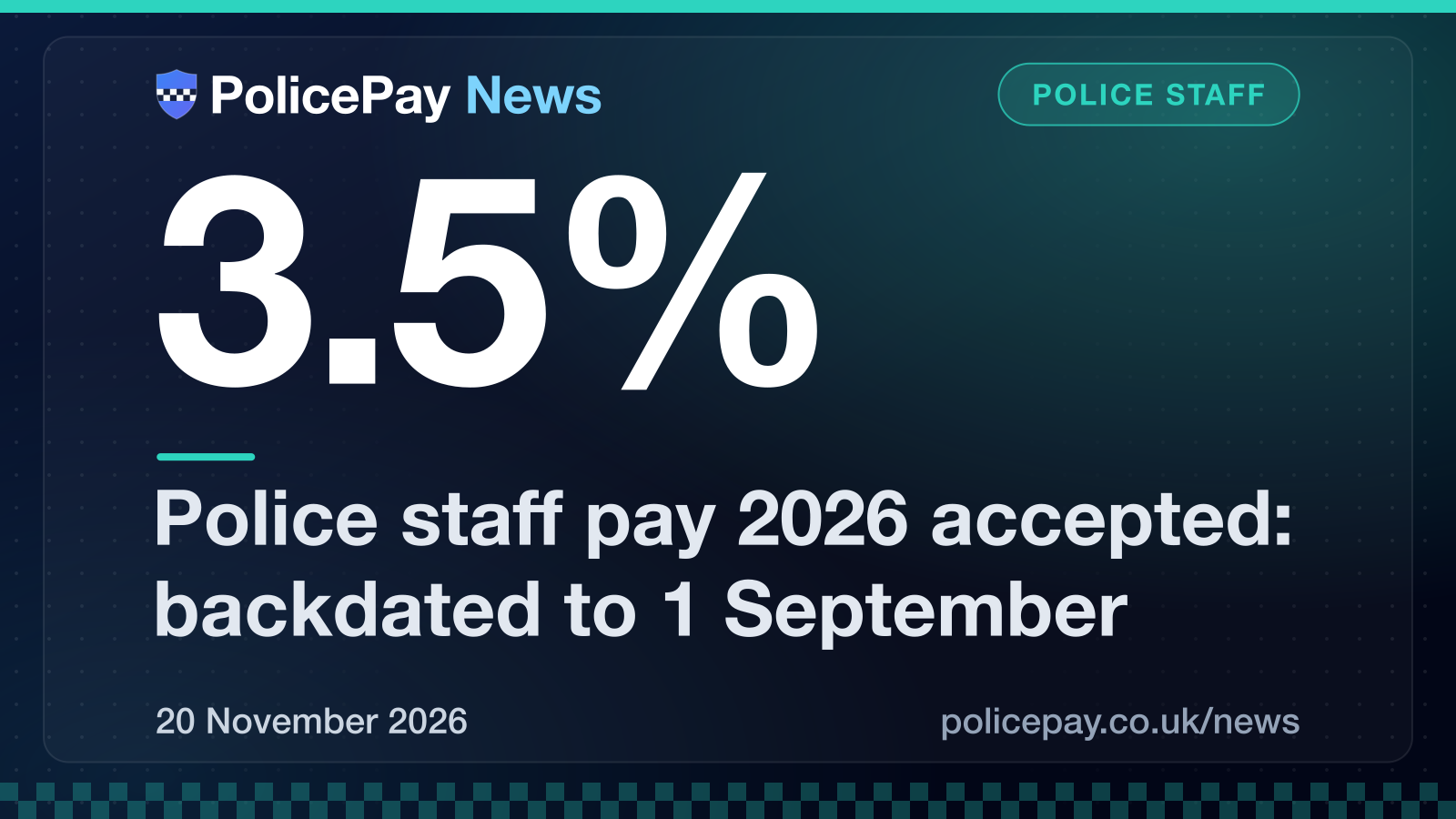
- Police staff covered by the Police Staff Council: your 3.5% from 1 September 2026 was accepted after the UNISON ballot closed on 19 November and is due to be paid with back pay. The ONS headline leaves out back pay. The new rates only show in its figures from the month forces start paying them.
- Across the whole economy, regular pay rose 3.5% and 0.4% in real terms after CPI inflation. Figures like these feed into the evidence for the 2027/28 police pay round, which has not started yet.
The Office for National Statistics (ONS) published its latest average weekly earnings figures on 17 November 2026. For July to September 2026, average regular pay (excluding bonuses) across Great Britain was 3.5% higher than a year earlier. Total pay, including bonuses, was up 3.6%.
The split between sectors is wide. Average regular pay grew 5.4% in the public sector and 3.1% in the private sector. After the public sector, the finances and business sector had the strongest regular growth, at 3.5%.
Regular pay growth, July to September 2026
- 5.4% Public sector average regular pay growth ONS
- 3.1% Private sector average regular pay growth ONS
- 3.5% Whole economy average regular pay growth ONS
- 3.5% Police officer and police staff pay rise from 1 September 2026 HCWS264, UNISON
In July to September 2026 average regular pay grew 5.4% in the public sector, 3.1% in the private sector and 3.5% across the whole economy, according to the ONS. Police officers in England and Wales and police staff both have a 3.5% rise from 1 September 2026.
Why 5.4% is not a pay rise anyone was given
It is tempting to read 5.4% as "the public sector got 5.4%". The ONS is clear that it is not that. Average weekly earnings divide total pay by the number of employees, so the ONS says they are not a measure of rates of pay and can move when the make-up of the workforce changes. They come from a survey of businesses, so they are estimates.
The ONS also says public sector pay growth "continues to be affected by variations in the timing of some pay awards this year", adding that this base effect is reducing. Put simply, when a large group gets its rise in a different month from the year before, the year-on-year comparison is pushed up or down for a while.
Public sector regular pay growth (three-month average) has moved between 4.8% and 6.3% this year. It was 6.0% in the three months to January, fell to 4.8% in the three months to March and rose to 6.3% in the three months to July before easing to 5.4% in the three months to September.
Public sector regular pay growth, February to September 2026
Public sector average regular pay growth, three-month average year on year, in 2026: February 5.2%, March 4.8%, April 5.1%, May 5.5%, June 6.1%, July 6.3%, August 6.2% and September 5.4%.
What police officers and staff actually got
Police officers in England and Wales received 3.5% on every rank and pay point from 1 September 2026. The Police Remuneration Review Body had recommended 3.9%. The police pay rise 2026/27 guide shows your new pay by rank and the back pay.
Police staff covered by the Police Staff Council also get 3.5% on all pay points from 1 September 2026. UNISON members voted 92.5% to accept in the ballot that closed on 19 November and the union side formally accepted. UNISON says some forces may pay it in December and some in January, backdated to 1 September. The police staff pay rise tracker has every step.
One detail matters for anyone comparing their payslip with the ONS. The headline figures leave out arrears. The ONS records back pay in the month it is paid, not the month it is due for. So a backdated award only feeds into the regular pay figures from the month forces start paying the new rates.
Real terms: the whole economy picture
Adjusted for CPI inflation, whole economy regular pay grew 0.4% in July to September and total pay 0.6%. Using CPIH, which includes owner occupiers' housing costs, real growth was 0.2% for regular pay and 0.3% for total pay.
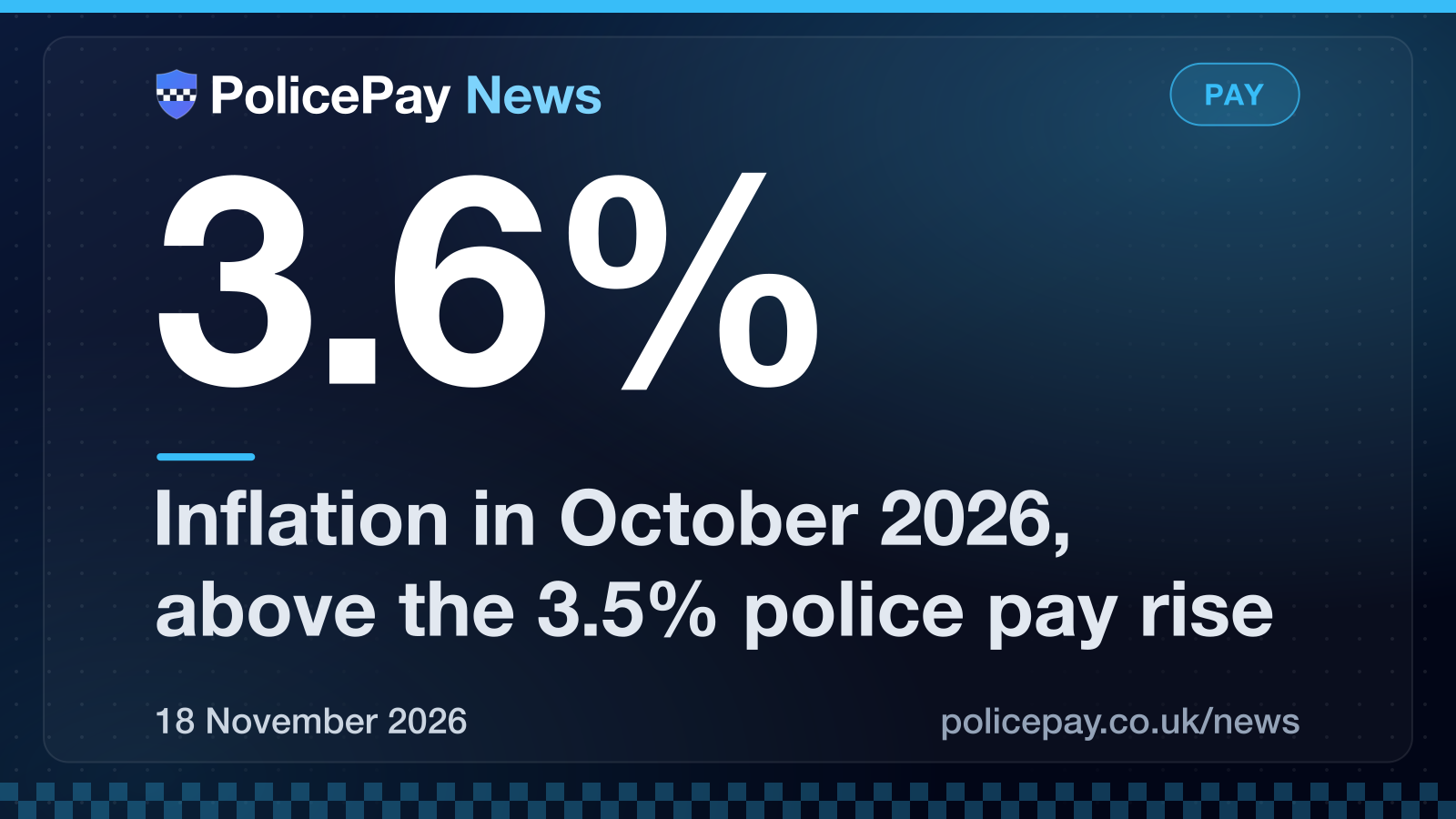
For police officers, the comparison that matters is the award against prices. CPI was 3.6% in the 12 months to October 2026, just above the 3.5% award. Our real-terms police pay since 2010 page shows the longer picture by rank.
What this means for the 2027/28 pay round
Pay review bodies look at pay growth elsewhere in the economy alongside inflation, recruitment, retention and affordability. None of those decides the award on its own. As of 24 November 2026, the Home Office had not published a 2027/28 remit letter to the Police Remuneration Review Body on its GOV.UK page, so the round has not formally started and no figure for 2027 has been proposed or agreed.
Our police pay rise 2027/28 tracker will show the remit letter, the evidence and the decision as each is published. The ONS publishes its next earnings figures on 15 December 2026. To see how your own pay has kept up with prices, use the police pay vs inflation calculator.
Sources
- ONS, Average weekly earnings in Great Britain: November 2026 (17 November 2026). July to September 2026: regular pay growth 3.5%, total pay 3.6%; real growth using CPI 0.4% regular and 0.6% total, using CPIH 0.2% and 0.3%; public sector regular growth 5.4%, private sector 3.1%; finances and business sector 3.5%; public sector growth affected by the timing of some pay awards, base effect reducing; AWE is not a measure of rates of pay; headline excludes arrears, which are counted when paid. Accessed 24 November 2026.
- ONS, AWE: public sector year on year three month average growth, regular pay (series KAJ7). Three-month average growth in 2026, by the last month of each period: January 6.0%, February 5.2%, March 4.8%, April 5.1%, May 5.5%, June 6.1%, July 6.3%, August 6.2%, September 5.4%. Next release 15 December 2026. Accessed 24 November 2026.
- ONS, AWE: private sector year on year three month average growth, regular pay (series KAJ4). Private sector regular pay growth 3.1% in July to September 2026. Accessed 24 November 2026.
- Home Office written statement HCWS264 (15 July 2026). Police officers in England and Wales: 3.5% on all ranks and pay points from 1 September 2026; the PRRB recommended 3.9%. Accessed 24 November 2026.
- UNISON, Police staff pay offer 2026. Ballot result 92.5% to accept, ballot closed 19 November; the Trade Union Side formally accepted. Award: 3.5% on all pay points from 1 September 2026. Some forces may pay in December, some in January, backdated to 1 September. Accessed 24 November 2026.
- ONS, Consumer price inflation, UK: October 2026 (18 November 2026). CPI 3.6% in the 12 months to October 2026. Accessed 24 November 2026.
- Police Remuneration Review Body on GOV.UK. Checked 24 November 2026: the latest England and Wales remit letter listed is for 2026 to 2027 (19 February 2026); no 2027/28 remit letter. Accessed 24 November 2026.
Corrections
No corrections to this article.
If we get something wrong, we fix it, add a dated correction here, update the time above and record it in our public corrections log. To report an error, email andrew@policepay.co.uk or use the contact page with the figure and your source. This article is general information, not financial or legal advice.
About this article
Written by Andrew Thomas, Founder, PolicePay. Before publishing, every figure and claim was checked against the primary sources above in a separate, independent check. Articles are not published until that check passes. Read About Police Pay News for how we choose stories, check facts, use AI tools and stay independent. Our news standards set the rules.